بِسْمِ ٱللَّٰهِ ٱلرَّحْمَٰنِ ٱلرَّحِيمِ
Loading...

Learn the complete method of prayer with step-by-step instructions for beginners and children
"And establish prayer and give zakah and bow with those who bow [in worship]."
(Surah Al-Baqarah, 2:43)
Salah (Prayer) is the second pillar of Islam and the first act of worship that Allah will question us about on the Day of Judgment. It is the direct connection between the servant and Allah. The Prophet Muhammad (PBUH) said: "The first matter that the slave will be brought to account for on the Day of Judgment is the prayer. If it is sound, then the rest of his deeds will be sound. And if it is bad, then the rest of his deeds will be bad." (Tabarani)
Check today's prayer times: Prayer Times Schedule
Salah is the second pillar of Islam after Shahadah. The Prophet (PBUH) said: "Islam is built upon five: testimony that there is no god but Allah and Muhammad is His Messenger, establishing Salah, paying Zakah, Hajj, and fasting Ramadan." (Bukhari & Muslim)
The first thing we will be asked about on the Day of Judgment is our prayer. If our prayer is accepted, all other deeds will be accepted. If rejected, all other deeds will be rejected.
Allah says: "Indeed, prayer prohibits immorality and wrongdoing." (Quran 29:45)
Five daily prayers wash away sins just as bathing five times a day cleanses the body from dirt.
Salah is the direct conversation between the servant and the Creator - a moment of peace and spiritual connection.
Follow these simple steps to perform Salah correctly. For kids and beginners, start with learning one step at a time.

Silently intend in your heart which prayer you are performing. For example: "I intend to pray 2 rak'ahs of Fajr prayer for Allah facing the Qibla." The intention should be in your heart, not necessarily spoken.

Raise both hands up to your ears (men) or shoulders (women) and say: الله أكبر (Allahu Akbar - Allah is the Greatest).
Then place your right hand over your left hand on your chest.

First recite the opening supplication (Thana), then Surah Al-Fatihah, followed by another Surah or verses from Quran.
سُبْحَانَكَ اللَّهُمَّ وَبِحَمْدِكَ، وَتَبَارَكَ اسْمُكَ، وَتَعَالَى جَدُّكَ، وَلَا إِلَهَ غَيْرُكَ
"Glory and praise be to You, O Allah. Blessed is Your name, and exalted is Your majesty. There is no god but You."
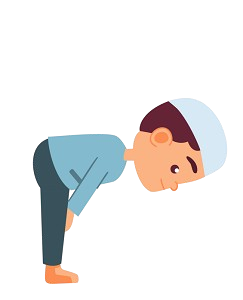
Say الله أكبر and bow down. Place your hands on your knees, keep your back straight, and say three times:
سُبْحَانَ رَبِّيَ الْعَظِيمِ
"Glory to my Lord, the Most Great."

Raise up from bowing while saying:
سَمِعَ اللَّهُ لِمَنْ حَمِدَهُ
"Allah hears those who praise Him."
Then stand straight and say:
رَبَّنَا وَلَكَ الْحَمْدُ
"Our Lord, to You is all praise."

Say الله أكبر and go down into prostration. Place your forehead, nose, palms, knees, and toes on the ground. Say three times:
سُبْحَانَ رَبِّيَ الْأَعْلَى
"Glory to my Lord, the Most High."

Say الله أكبر and sit up. Sit on your left foot with right foot upright. Place your hands on your thighs and say:
رَبِّ اغْفِرْ لِي
"My Lord, forgive me."

Say الله أكبر and perform the second prostration exactly like the first one.

After completing all rak'ahs, sit for Tashahhud. Recite the full Tashahhud and send blessings upon the Prophet (PBUH).
التَّحِيَّاتُ لِلَّهِ وَالصَّلَوَاتُ وَالطَّيِّبَاتُ، السَّلَامُ عَلَيْكَ أَيُّهَا النَّبِيُّ وَرَحْمَةُ اللَّهِ وَبَرَكَاتُهُ، السَّلَامُ عَلَيْنَا وَعَلَى عِبَادِ اللَّهِ الصَّالِحِينَ، أَشْهَدُ أَنْ لَا إِلَهَ إِلَّا اللَّهُ، وَأَشْهَدُ أَنَّ مُحَمَّدًا عَبْدُهُ وَرَسُولُهُ

Turn your face to the right and say:
السَّلَامُ عَلَيْكُمْ وَرَحْمَةُ اللَّهِ
"Peace and mercy of Allah be upon you."
Then turn to the left and repeat the same. Your prayer is now complete!
سُبْحَانَكَ اللَّهُمَّ وَبِحَمْدِكَ، وَتَبَارَكَ اسْمُكَ، وَتَعَالَى جَدُّكَ، وَلَا إِلَهَ غَيْرُكَ
"Glory and praise be to You, O Allah. Blessed is Your name, and exalted is Your majesty. There is no god but You."
أَعُوذُ بِاللَّهِ مِنَ الشَّيْطَانِ الرَّجِيمِ
"I seek refuge with Allah from the accursed Satan."
بِسْمِ اللَّهِ الرَّحْمَٰنِ الرَّحِيمِ ﴿١﴾ الْحَمْدُ لِلَّهِ رَبِّ الْعَالَمِينَ ﴿٢﴾ الرَّحْمَٰنِ الرَّحِيمِ ﴿٣﴾ مَالِكِ يَوْمِ الدِّينِ ﴿٤﴾ إِيَّاكَ نَعْبُدُ وَإِيَّاكَ نَسْتَعِينُ ﴿٥﴾ اهْدِنَا الصِّرَاطَ الْمُسْتَقِيمَ ﴿﴾ صِرَاطَ الَّذِينَ أَنْعَمْتَ عَلَيْهِمْ غَيْرِ الْمَغْضُوبِ عَلَيْهِمْ وَلَا الضَّالِّينَ ﴿٧﴾
"In the name of Allah, the Entirely Merciful, the Especially Merciful. (1) [All] praise is [due] to Allah, Lord of the worlds. (2) The Entirely Merciful, the Especially Merciful. (3) Sovereign of the Day of Recompense. (4) It is You we worship and You we ask for help. (5) Guide us to the straight path. (6) The path of those upon whom You have bestowed favor, not of those who have earned [Your] anger or of those who are astray. (7)"
Important: Surah Al-Fatihah must be recited in every rak'ah of every prayer. The Prophet (PBUH) said: "There is no prayer for the one who does not recite the Opening of the Book (Al-Fatihah)." (Bukhari & Muslim)
After Al-Fatihah, recite any Surah or verses from Quran. Here are short Surahs perfect for kids and beginners:
قُلْ هُوَ اللَّهُ أَحَدٌ ﴿١﴾ اللَّهُ الصَّمَدُ ﴿٢﴾ لَمْ يَلِدْ وَلَمْ يُولَدْ ﴿٣﴾ وَلَمْ يَكُن لَّهُ كُفُوًا أَحَدٌ ﴿٤﴾
"Say, He is Allah, [who is] One. Allah, the Eternal Refuge. He neither begets nor is born. Nor is there to Him any equivalent."
قُلْ أَعُوذُ بِرَبِّ الْفَلَقِ ﴿١﴾ مِن شَرِّ مَا خَلَقَ ﴿٢﴾ وَمِن شَرِّ غَاسِقٍ إِذَا وَقَبَ ﴿٣﴾ وَمِن شَرِّ النَّفَّاثَاتِ فِي الْعُقَدِ ﴿٤﴾ وَمِن شَرِّ حَاسِدٍ إِذَا حَسَدَ ﴿٥﴾
"Say, I seek refuge in the Lord of daybreak. From the evil of that which He created. And from the evil of darkness when it settles. And from the evil of the blowers in knots. And from the evil of an envier when he envies."
قُلْ أَعُوذُ بِرَبِّ النَّاسِ ﴿١﴾ مَلِكِ النَّاسِ ﴿٢﴾ إِلَٰهِ النَّاسِ ﴿٣﴾ مِن شَرِّ الْوَسْوَاسِ الْخَنَّاسِ ﴿٤﴾ الَّذِي يُوَسْوِسُ فِي صُدُورِ النَّاسِ ﴿٥﴾ مِنَ الْجِنَّةِ وَالنَّاسِ ﴿٦﴾
"Say, I seek refuge in the Lord of mankind. The Sovereign of mankind. The God of mankind. From the evil of the retreating whisperer. Who whispers [evil] into the breasts of mankind. From among the jinn and mankind."
سُبْحَانَ اللَّهِ
"Glory be to Allah"
الْحَمْدُ لِلَّهِ
"All praise is for Allah"
اللَّهُ أَكْبَرُ
"Allah is the Greatest"
لَا إِلَهَ إِلَّا اللَّهُ وَحْدَهُ لَا شَرِيكَ لَهُ، لَهُ الْمُلْكُ وَلَهُ الْحَمْدُ، وَهُوَ عَلَى كُلِّ شَيْءٍ قَدِيرٌ
"There is no god but Allah alone, with no partner or associate. His is the Dominion and to Him be all praise, and He is able to do all things."
Use your right hand fingers: Thumb for 1-5, index for 6-10, middle for 11-15, ring for 16-20, pinky for 21-25. Then repeat for next 25. After completing 33 of each, say the complete statement once.
اللَّهُمَّ أَجِرْنِي مِنَ النَّارِ
"O Allah, protect me from the Fire."
رَبِّ اغْفِرْ لِي وَتُبْ عَلَيَّ إِنَّكَ أَنْتَ التَّوَّابُ الرَّحِيمُ
"My Lord, forgive me and accept my repentance, for You are the Accepter of Repentance, the Merciful."
لَا إِلَهَ إِلَّا اللَّهُ الْعَظِيمُ الْحَلِيمُ، لَا إِلَهَ إِلَّا اللَّهُ رَبُّ الْعَرْشِ الْعَظِيمِ، لَا إِلَهَ إِلَّا اللَّهُ رَبُّ السَّمَاوَاتِ وَرَبُّ الْأَرْضِ وَرَبُّ الْعَرْشِ الْكَرِيمِ
"There is no god but Allah, the Great, the Forbearing. There is no god but Allah, Lord of the mighty Throne. There is no god but Allah, Lord of the heavens, Lord of the earth, and Lord of the noble Throne."
Reciting Ayatul Kursi after every obligatory prayer ensures protection until the next prayer. The Prophet (PBUH) said: "Whoever recites Ayat al-Kursi after every prayer, nothing prevents him from entering Paradise except death." (Nasai)
The funeral prayer (Salat al-Janazah) is a collective obligation (Fard Kifayah) upon Muslims when a Muslim dies. It is prayed in congregation to seek forgiveness for the deceased.
Note: There is no ruku (bowing) or sujood (prostration) in Janaza prayer. It is performed standing throughout.
اللَّهُمَّ اغْفِرْ لَهُ وَارْحَمْهُ، وَعَافِهِ وَاعْفُ عَنْهُ، وَأَكْرِمْ نُزُلَهُ، وَوَسِّعْ مَدْخَلَهُ، وَاغْسِلْهُ بِالْمَاءِ وَالثَّلْجِ وَالْبَرَدِ، وَنَقِّهِ مِنَ الْخَطَايَا كَمَا نَقَّيْتَ الثَّوْبَ الْأَبْيَضَ مِنَ الدَّنَسِ، وَأَبْدِلْهُ دَارًا خَيْرًا مِنْ دَارِهِ، وَأَهْلًا خَيْرًا مِنْ أَهْلِهِ، وَزَوْجًا خَيْرًا مِنْ زَوْجِهِ، وَأَدْخِلْهُ الْجَنَّةَ، وَأَعِذْهُ مِنْ عَذَابِ الْقَبْرِ وَعَذَابِ النَّارِ
"O Allah, forgive him and have mercy on him. Give him health and pardon him. Honor his arrival and make his entrance spacious. Wash him with water, snow, and hail, and cleanse him of sin as a white garment is cleansed of dirt. Give him a home better than his home, a family better than his family, and a spouse better than his spouse. Admit him to Paradise and protect him from the torment of the grave and the torment of the Fire."
The Prophet (PBUH) said: "Whoever attends the funeral until the prayer is offered will have one Qirat of reward, and whoever attends until the burial is done will have two Qirat." (Bukhari)
If some Muslims perform it, the obligation is fulfilled for all. But if no one performs it, all Muslims in that area are sinful.
The prayer of many Muslims for forgiveness can intercede for the deceased on the Day of Judgment.
Friday prayer (Salat al-Jumu'ah) is obligatory for every adult, sane, male Muslim who is not traveling. It replaces the Dhuhr prayer on Fridays and consists of two rak'ahs preceded by a sermon (khutbah).
Important: During the khutbah, talking is prohibited. Listen attentively to the sermon.
The Prophet (PBUH) said: "The best day on which the sun rises is Friday. On it Adam was created, on it he was admitted to Paradise, and on it he was expelled therefrom." (Muslim)
The Prophet (PBUH) said: "The five daily prayers, and from one Jumu'ah to the next, are an expiation for whatever sins come in between, so long as one does not commit any major sin." (Muslim)
There is a time on Friday when Allah accepts all supplications. Many scholars say it's the last hour before sunset.
Friday is considered the weekly Eid for Muslims. The Prophet (PBUH) said: "Friday is the master of days, and the greatest of them before Allah." (Ibn Majah)
The Prophet (PBUH) said: "Whoever misses three Jumu'ah prayers without a valid excuse, Allah will place a seal upon his heart." (Abu Dawud) Valid excuses include sickness, travel, and extreme fear.
Eid ul-Fitr is celebrated on the 1st of Shawwal, marking the end of Ramadan. The prayer is performed after sunrise until before Dhuhr time.
The Imam delivers two khutbahs (sermons) after the prayer. It is Sunnah to listen to the khutbah. After prayer, Muslims greet each other saying "Eid Mubarak" and visit family and friends.
Eid ul-Adha is celebrated on the 10th of Dhul-Hijjah, commemorating Prophet Ibrahim's willingness to sacrifice his son. The prayer time is the same as Eid ul-Fitr.
The specific Takbeerat recited during Eid ul-Adha days:
اللَّهُ أَكْبَرُ، اللَّهُ أَكْبَرُ، لَا إِلَهَ إِلَّا اللَّهُ، وَاللَّهُ أَكْبَرُ، اللَّهُ أَكْبَرُ، وَلِلَّهِ الْحَمْدُ
"Allah is the Greatest, Allah is the Greatest. There is no god but Allah. And Allah is the Greatest. Allah is the Greatest, and to Allah belongs all praise."
Recite after every obligatory prayer from Fajr on 9th Dhul-Hijjah until Asr on 13th Dhul-Hijjah.
Eid prayers unite the Muslim community regardless of social status
Eid ul-Fitr thanks Allah for enabling us to complete Ramadan
Eid ul-Adha commemorates ultimate submission to Allah's will
The Prophet (PBUH) said: "For every people there is a feast and this is our feast."
The key to success in this life and the next
The Prophet (PBUH) said: "Command your children to pray when they become seven years old." (Abu Dawud)
Use prayer mats with their favorite colors, prayer charts with stickers, and reward systems.
Children learn by example. Pray as a family and let them see you praying regularly.
Start with short Surahs and basic positions. Gradually add more as they become comfortable.